
Financial reports tell the story of your business—but only if you know how to read them. Many business owners focus on revenue alone, overlooking the key financial insights that drive smarter decisions. Understanding your Profit & Loss Statement, Balance Sheet, and Cash Flow Statement can help you identify opportunities, avoid costly mistakes, and plan for sustainable growth. In this guide, we’ll explain how to read your financial reports like a CFO and use the numbers to make confident business decisions.
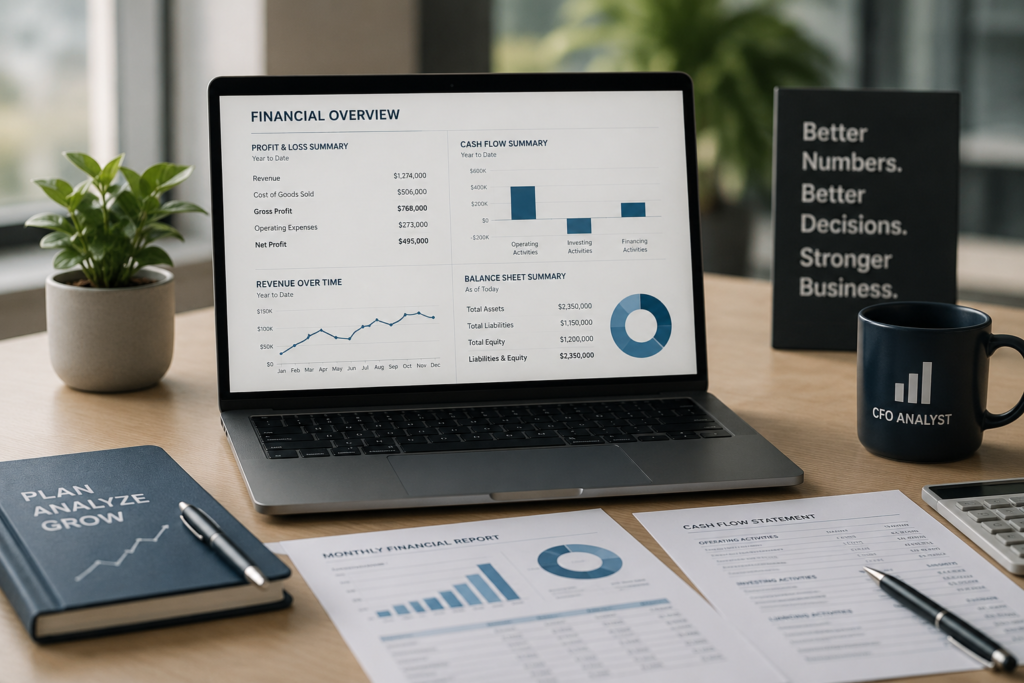
Understanding the Three Essential Financial Statements
Every successful business relies on three core financial reports: the Profit & Loss Statement, the Balance Sheet, and the Cash Flow Statement. Together, these reports provide a complete picture of your company’s financial health. Learning how they work together allows business owners to identify problems early, make informed decisions, and plan for sustainable growth.
Profit & Loss Statement: Is Your Business Actually Profitable?
The Profit & Loss Statement measures your company’s performance over a specific period. It shows whether your business is generating enough revenue to cover expenses and produce profit.
- Revenue
- Cost of Goods Sold
- Gross Profit
- Operating Expenses
- Net Profit
Balance Sheet: Understanding What Your Business Owns and Owes
The Balance Sheet provides a snapshot of your business at a specific point in time. It shows what the company owns, what it owes, and the owner’s equity.
- Assets
- Liabilities
- Equity
- Working Capital
- Current Ratio
Cash Flow Statement: Why Profit Doesn’t Always Mean Cash
Many profitable businesses still struggle because of poor cash flow. The Cash Flow Statement tracks how money moves through your business, helping you understand whether you have enough cash to operate and grow.
- Operating Activities
- Investing Activities
- Financing Activities
- Free Cash Flow
- Cash Position
Five Financial Metrics Every Business Owner Should Monitor
Beyond standard financial statements, several key performance indicators provide deeper insight into business performance.
- Gross Profit Margin
- Net Profit Margin
- Operating Margin
- Current Ratio
- Accounts Receivable Turnover
Common Mistakes Business Owners Make
- Looking only at revenue
- Ignoring cash flow
- Reviewing reports only at year-end
- Not comparing actual results to budget
- Making decisions without financial data
How a Virtual CFO Uses Financial Reports
A Virtual CFO goes beyond bookkeeping by interpreting financial reports and turning them into actionable business strategies. Instead of simply recording transactions, a Virtual CFO identifies opportunities to increase profitability, improve cash flow, reduce unnecessary expenses, and support long-term growth through data-driven decision making.
Final Thoughts
Financial reports are far more than compliance documents—they’re powerful decision-making tools. Understanding how to read them gives business owners greater control over their finances and confidence in planning for the future. With the right financial insights, you can make smarter decisions, reduce risk, and build a stronger, more profitable business.
Need Help Understanding Your Financial Reports?
Our Virtual CFO services provide clear financial analysis, KPI dashboards, cash flow forecasting, and strategic guidance to help your business grow with confidence.